
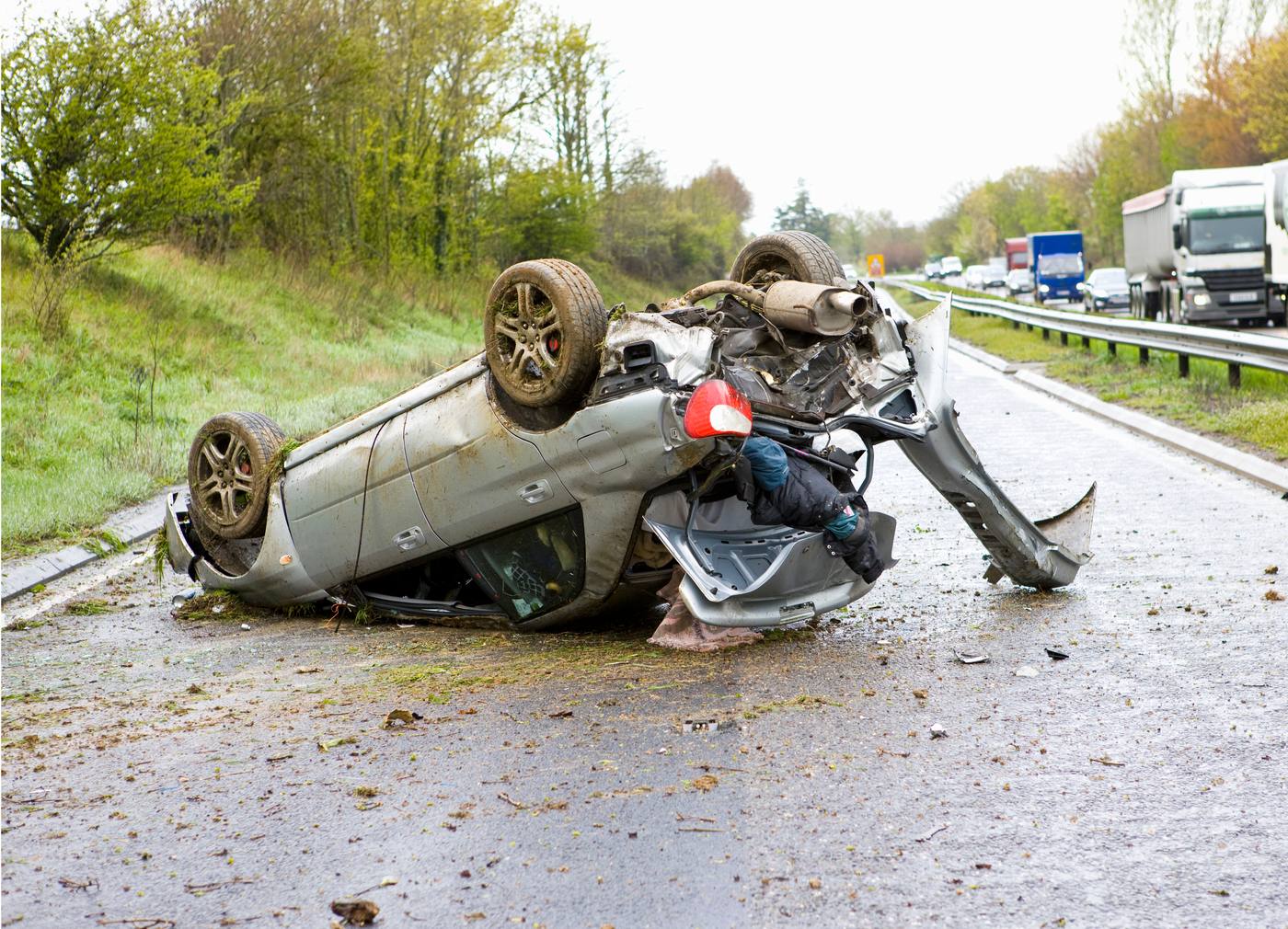
At Fault Since 2003
Is Colorado a no-fault state for car accidents? No. Colorado repealed its no-fault system on July 1, 2003 and has been an at-fault (tort) state ever since. The driver who caused the crash, through their liability insurance, pays for the harm. You can file against the at-fault driver's insurer, use your own optional coverages, or sue. Fault is shared under Colorado's comparative negligence rule, C.R.S. § 13-21-111, which reduces your recovery by your percentage of fault and bars it at 50 percent.
Type "is Colorado no-fault" into a search bar and you will find confident answers in both directions, some of them on law firm websites. The confusion is understandable. Colorado really was a no-fault state for three decades, plenty of longtime residents remember filing with their own insurer no matter who caused the wreck, and a stack of old internet pages was never updated. But the no-fault era ended on July 1, 2003. Every Colorado car accident since then has run on fault.
That one fact reorganizes everything about how a claim works: who you call, whose insurance pays, what coverage you should be carrying, and what happens when the other driver's insurer decides the crash was partly your doing.
What "At-Fault" Actually Means
In an at-fault (lawyers say "tort") system, the person who caused the crash is financially responsible for it. Their liability insurance exists to pay the people they hurt. After a collision on I-25 or Founders Parkway, the injured person's claim runs against the at-fault driver's policy, covering medical bills, lost wages, property damage, and pain and suffering.
Under the old no-fault system, each driver's own policy paid their medical bills regardless of blame, and lawsuits were restricted unless injuries crossed statutory thresholds. Colorado let that model expire in 2003, after years of debate over what the no-fault mandates were doing to premiums. The trade: more accountability, but also more arguing, because under an at-fault system the question "whose fault was it?" is now worth money.

Fault Is Rarely All or Nothing
Colorado shares fault by percentage. The rule is modified comparative negligence:
"Contributory negligence shall not bar recovery in any action by any person… to recover damages for negligence resulting in death or injury to person or property, if such negligence was not as great as the negligence of the person against whom recovery is sought, but any damages allowed shall be diminished in proportion to the amount of negligence attributable to the person for whose injury, damage, or death recovery is made." (C.R.S. § 13-21-111)
Plain version: your award shrinks by your share of the fault, and at 50 percent or more you recover nothing. Rear-ended at a light in Castle Rock with no dispute about blame, the rule barely matters. Two cars merging on C-470, each claiming the other drifted, and the rule becomes the entire case. Insurers know the 50 percent bar as well as lawyers do, and pushing an injured person's share upward, 10 percent here, 15 there, is standard adjusting. Read the statute yourself at C.R.S. § 13-21-111.
Free Guide: What to Do After an Injury
A step-by-step PDF covering the first moves that protect your health and your claim in Colorado.
Been in a wreck? The clock is already running.
Evidence disappears fast and insurers move faster. Talk to a Colorado injury attorney today. Same-day response, free consultation.
What Insurance Colorado Actually Requires
The at-fault system only works if drivers carry liability coverage, so Colorado's auto insurance article, C.R.S. § 10-4-601 et seq., mandates minimums: $25,000 per person and $50,000 per accident for bodily injury, plus $15,000 for property damage. Those numbers are the floor, and a single emergency room visit can clear $25,000 before the first follow-up appointment.
Two optional coverages fill the gaps the at-fault system leaves, and both exist because the legislature worried about exactly those gaps:
- Med-pay. Insurers must offer $5,000 in medical payments coverage, and it is included unless you reject it in writing. It pays your initial medical bills regardless of fault, fast, and Colorado law bars the med-pay insurer from clawing it back out of your settlement. For a treatment-first recovery, med-pay is the first dollars in.
- UM/UIM. Uninsured and underinsured motorist coverage stands in when the at-fault driver carries nothing or too little. It must be offered, and rejecting it requires a written waiver. Given how many drivers carry only the minimum, this is the coverage that most often rescues serious-injury claims.
Your Three Paths After a Crash
An at-fault state gives an injured person three routes, often used in combination. First, the liability claim against the at-fault driver's insurer, the standard path. Second, your own optional coverages: med-pay immediately, UM/UIM when the other driver's limits fall short, collision for the vehicle. Third, a lawsuit, the lever behind every negotiation, subject to Colorado's three-year statute of limitations for motor vehicle claims.
Which paths apply, and in what order, is strategy. What never changes is the value of documentation: the police report, photos, witnesses, and medical care that starts promptly and continues without gaps. In a fault state, the record is the claim.

Why the No-Fault Myth Still Costs People Money
Believing Colorado is no-fault leads to three expensive mistakes. People skip the liability claim entirely and quietly absorb their own losses through health insurance. People assume they cannot recover because they were partly at fault, when the law allows recovery at anything below 50 percent. And people carry minimum coverage with no UM/UIM, the exact posture the 2003 system change punishes. Twenty-plus years later, the most useful thing a Colorado driver can know about no-fault is that it ended.
Injured and not sure what your case is worth?
Do not accept the first offer before you know your numbers. Free case review with a Colorado attorney.
Frequently Asked Questions
Is Colorado a no-fault state?
No. Colorado ended its no-fault system on July 1, 2003. It is an at-fault state: the driver who caused the crash, through their liability insurance, pays for the injuries and damage. Older websites still describe the no-fault rules, which is why the myth persists.
Who pays my medical bills after a Colorado car accident?
Ultimately the at-fault driver's liability insurance, but that payment usually comes at settlement. In the meantime, med-pay coverage (offered at $5,000 and included unless rejected in writing) pays early bills regardless of fault, and health insurance covers treatment. Colorado bars med-pay insurers from taking reimbursement out of your settlement.
What are Colorado's minimum car insurance requirements?
Liability coverage of $25,000 per person and $50,000 per accident for bodily injury, and $15,000 for property damage. Insurers must also offer $5,000 in med-pay and UM/UIM coverage matching your liability limits, both of which require a written rejection to decline.
Can I recover if the accident was partly my fault?
Yes, if your share is less than 50 percent. Under C.R.S. § 13-21-111, your recovery is reduced by your fault percentage: a $100,000 award with 20 percent fault becomes $80,000. At 50 percent or more, you recover nothing, which is why insurers argue fault percentages so hard.
How long do I have to file a car accident claim in Colorado?
Three years from the crash for motor vehicle claims under C.R.S. § 13-80-101, one year longer than Colorado's general injury deadline. Evidence ages much faster than that, so the practical timeline for building a strong claim is measured in weeks.
What if the other driver has no insurance?
That is what uninsured motorist coverage is for. If you carry UM/UIM, your own policy steps in and pays what the uninsured driver should have, up to your limits. If you rejected UM/UIM in writing, your options narrow to suing a driver who likely has few collectable assets.
Crashed in an At-Fault State? Build the Fault Case Early
In Colorado, the percentages decide the outcome, and the percentages get decided by evidence gathered early. Tactical Lawyers handles car accident claims across Douglas County and the Denver metro from Castle Rock, on contingency. We coordinate your medical treatment first, then deal with the adjusters. Call (720) 499-0000 or request a free consultation; we respond within 24 hours, usually the same day.
This article is for informational purposes only and is not legal advice. Car accident outcomes turn on specific facts; consult a licensed Colorado attorney about your situation.