

Who You Can Actually Sue
Who can be sued after a truck accident in Colorado? Usually more parties than the driver. Depending on the facts, a claim can reach the trucking company (which is responsible for its driver's on-the-job negligence and for its own hiring and supervision), the freight broker, the cargo loader, a maintenance contractor, or a parts manufacturer. Federal rules require interstate carriers to hold at least $750,000 in liability coverage, and the deadline to file a motor vehicle claim in Colorado is three years under C.R.S. § 13-80-101.
A loaded semi can weigh 80,000 pounds. A Honda Civic weighs about 3,000. When the two meet on I-25 near Castle Rock or on the I-70 grade west of Denver, physics does not split the harm evenly, and the legal case that follows does not look like an ordinary car accident claim either. Different rules, different defendants, different insurance, and a very different opponent on the other side.
This article walks through what changes when the vehicle that hit you was a commercial truck, and why the first few weeks matter more in these cases than in almost any other injury claim.
A Truck Case Is a Business Dispute, Not Just a Crash
When two passenger cars collide, the claim usually involves two drivers and two insurance adjusters. A truck crash drops you into a commercial operation. The driver may be an employee, an owner-operator, or a contractor leased to a carrier. The trailer may belong to a different company than the tractor. The freight was scheduled by a broker, loaded by a shipper, and the rig was maintained by yet another vendor.
Each of those relationships is a potential source of liability, and each company behind them has insurers and defense counsel who start working the file the day of the crash. Many large carriers dispatch rapid-response teams to serious accident scenes. The injured person is often still in the hospital while that happens. That gap, the company working its defense while you work on breathing, is the single biggest reason truck cases are handled differently from the start.
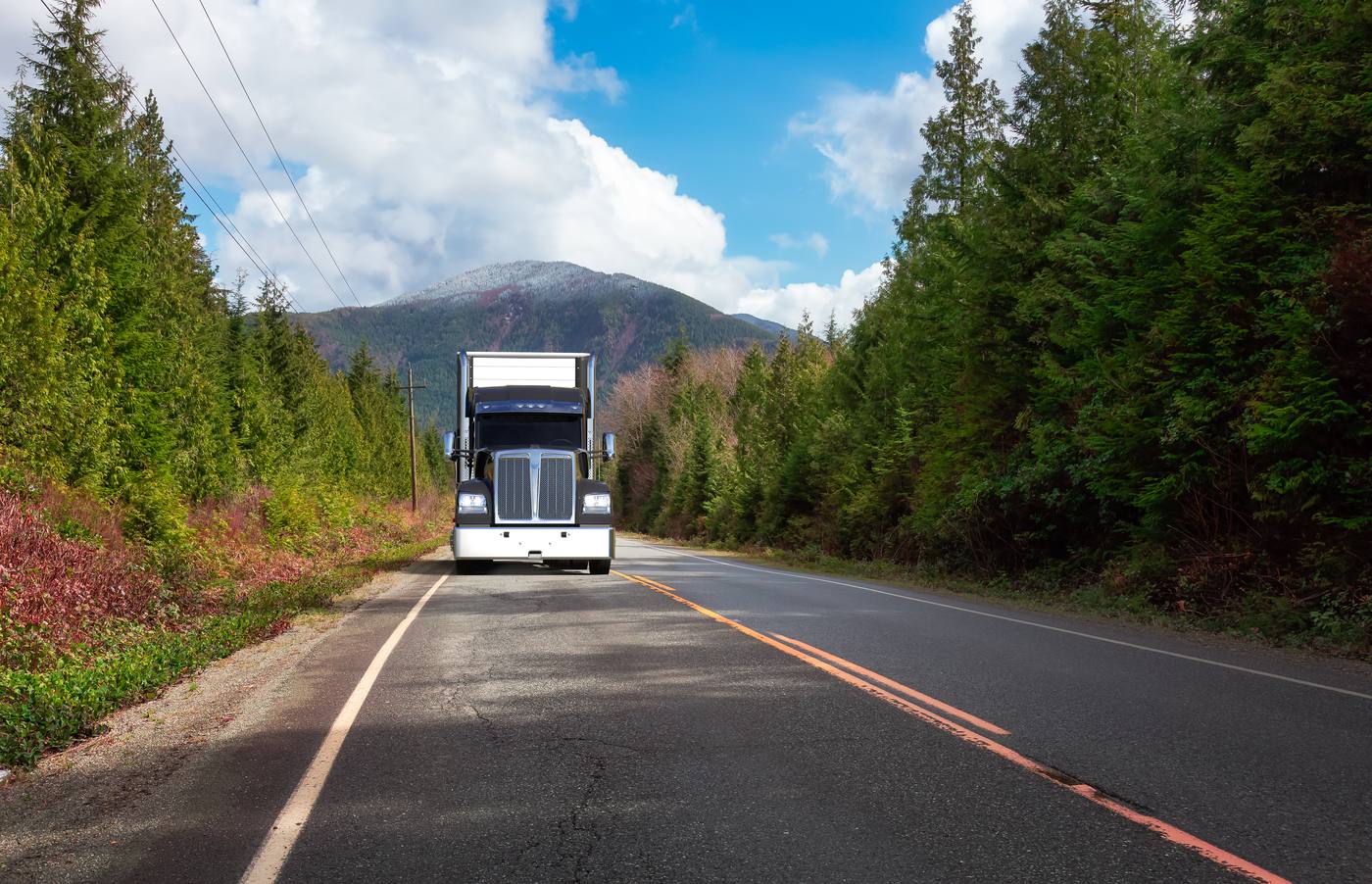
The Layers of Liability
Colorado law lets an injured person pursue every party whose negligence contributed to the crash. In a truck case, the realistic candidates include:
- The driver, for ordinary negligence: speeding on a downgrade, following too closely, distracted or drowsy driving.
- The motor carrier, on two separate theories. It answers for its driver's on-the-job negligence (the doctrine is called respondeat superior), and it answers for its own choices: hiring a driver with a bad record, skipping training, pushing schedules that require hours-of-service violations.
- The freight broker or shipper, in some cases, for selecting an unsafe carrier.
- The cargo loader, when shifting or unbalanced freight caused the rollover or jackknife.
- A maintenance contractor or parts manufacturer, when brakes, tires, or coupling systems failed.
Sorting out which layers apply is fact work. It depends on contracts, logs, and records that only come out through investigation, which is why naming the right defendants is rarely possible on day one.
Free Guide: What to Do After an Injury
A step-by-step PDF covering the first moves that protect your health and your claim in Colorado.
Been in a wreck? The clock is already running.
Evidence disappears fast and insurers move faster. Talk to a Colorado injury attorney today. Same-day response, free consultation.
The Federal Rulebook That Car Cases Don't Have
Interstate trucking is governed by the Federal Motor Carrier Safety Regulations, and those rules give a Colorado injury claim a second source of standards beyond state traffic law. Three matter most.
Hours of service (49 CFR Part 395). A property-carrying driver may drive a maximum of 11 hours inside a 14-hour on-duty window, after 10 consecutive hours off, with a 30-minute break required after 8 cumulative hours of driving. Weekly limits of 60 or 70 hours apply on top. Electronic logging devices record compliance automatically, so fatigue violations leave a data trail.
Minimum insurance (49 CFR Part 387). Interstate carriers hauling general freight must carry at least $750,000 in liability coverage, and hazardous loads require $1 million to $5 million. Compare that to the $25,000 per person minimum Colorado requires of ordinary drivers. The coverage exists, but so does the incentive to defend it hard.
Maintenance and qualification files. Carriers must keep driver qualification files, drug and alcohol testing records, and systematic inspection and repair records. Gaps in those files are evidence.
The Three-Year Deadline (and Why You Should Ignore It)
Truck crashes are motor vehicle accidents, so Colorado's three-year statute of limitations at C.R.S. § 13-80-101 applies rather than the general two-year injury deadline:
"All tort actions for bodily injury or property damage arising out of the use or operation of a motor vehicle… shall be commenced within three years after the cause of action accrues, and not thereafter." (C.R.S. § 13-80-101(1)(n))
Three years sounds like room to breathe. In a truck case it is misleading, because the evidence does not wait. Electronic logging data can be overwritten in months. Carriers are only required to keep certain records for limited periods. Drivers change jobs, dashcam footage gets recycled, and the tractor itself gets repaired and returned to service. A preservation letter (lawyers call it a spoliation letter) sent early forces the carrier to hold the logs, the black-box data, the qualification file, and the vehicle. Wait a year to act and the strongest proof may simply be gone, lawfully.
Fault Sharing Still Applies
Colorado's modified comparative negligence rule, C.R.S. § 13-21-111, governs truck cases the same way it governs car cases. Your recovery is reduced by your percentage of fault, and at 50 percent or more you recover nothing. Expect the carrier's insurer to look for that percentage: a lane change, a phone record, speed. With a $750,000 policy or more on the line, shaving 20 percent off a verdict is worth real money to them, so the fault fight in truck cases tends to be aggressive and well funded.

What to Do in the First Two Weeks
Get medical care first and follow through with it. At Tactical Lawyers the treatment-first approach means care gets coordinated before anyone talks numbers, which matters double in truck cases because the injuries tend to be severe and the records become the spine of the claim. Then preserve what you can: photos, witness names, the police report number, the truck's USDOT number if you have it. Decline to give the carrier's insurer a recorded statement before you have advice. And get a preservation letter out early, because the clock on the electronic evidence is shorter than the clock on the lawsuit.
Injured and not sure what your case is worth?
Do not accept the first offer before you know your numbers. Free case review with a Colorado attorney.
Frequently Asked Questions
Who can be sued after a truck accident in Colorado?
Potentially the driver, the motor carrier, a freight broker or shipper, the cargo loader, a maintenance contractor, or a parts manufacturer. The carrier is responsible both for its driver's negligence and for its own hiring, training, and scheduling decisions. Identifying every liable party requires records that come out in investigation.
How long do I have to file a truck accident claim in Colorado?
Three years from the crash under C.R.S. § 13-80-101, the motor vehicle statute of limitations. The practical deadline is much shorter, because electronic logs, dashcam footage, and maintenance records can be lost or lawfully destroyed within months unless a preservation letter forces the carrier to keep them.
How much insurance do trucking companies have to carry?
Federal rules require interstate carriers hauling general freight to carry at least $750,000 in liability coverage, and hazardous cargo pushes the requirement to between $1 million and $5 million. Many carriers hold more. That is thirty times the $25,000 minimum Colorado requires of ordinary drivers.
What are the hours-of-service rules for truck drivers?
A property-carrying driver may drive up to 11 hours within a 14-hour on-duty window after 10 consecutive hours off, must take a 30-minute break after 8 cumulative hours of driving, and faces 60 or 70-hour weekly limits. Electronic logging devices record compliance, so violations are provable when the data is preserved.
What if I was partly at fault for the truck accident?
Colorado's modified comparative negligence rule reduces your recovery by your percentage of fault and bars recovery entirely at 50 percent or more. If a jury found $500,000 in damages and put 20 percent of the fault on you, you would recover $400,000. Expect the carrier's insurer to push hard on this issue.
Should I talk to the trucking company's insurance adjuster?
Not before getting legal advice. Carriers and their insurers begin building a defense immediately, sometimes within hours of the crash, and a recorded statement given early is frequently used to assign you a share of fault later. You are not required to give one to the other side's insurer.
Hit by a Commercial Truck? Move Before the Evidence Does
Truck cases reward early, organized work: medical care that gets documented, defendants identified while records still exist, and a preservation demand that locks down the data. Tactical Lawyers handles truck accident claims across Douglas County and the Denver metro from our Castle Rock office, on contingency, with no fee unless we recover for you. We coordinate your medical treatment first and respond to every inquiry within 24 hours, usually the same day. Call (720) 499-0000 or request a free consultation.
This article is for informational purposes only and is not legal advice. Truck accident outcomes turn on specific facts; consult a licensed Colorado attorney about your situation.