
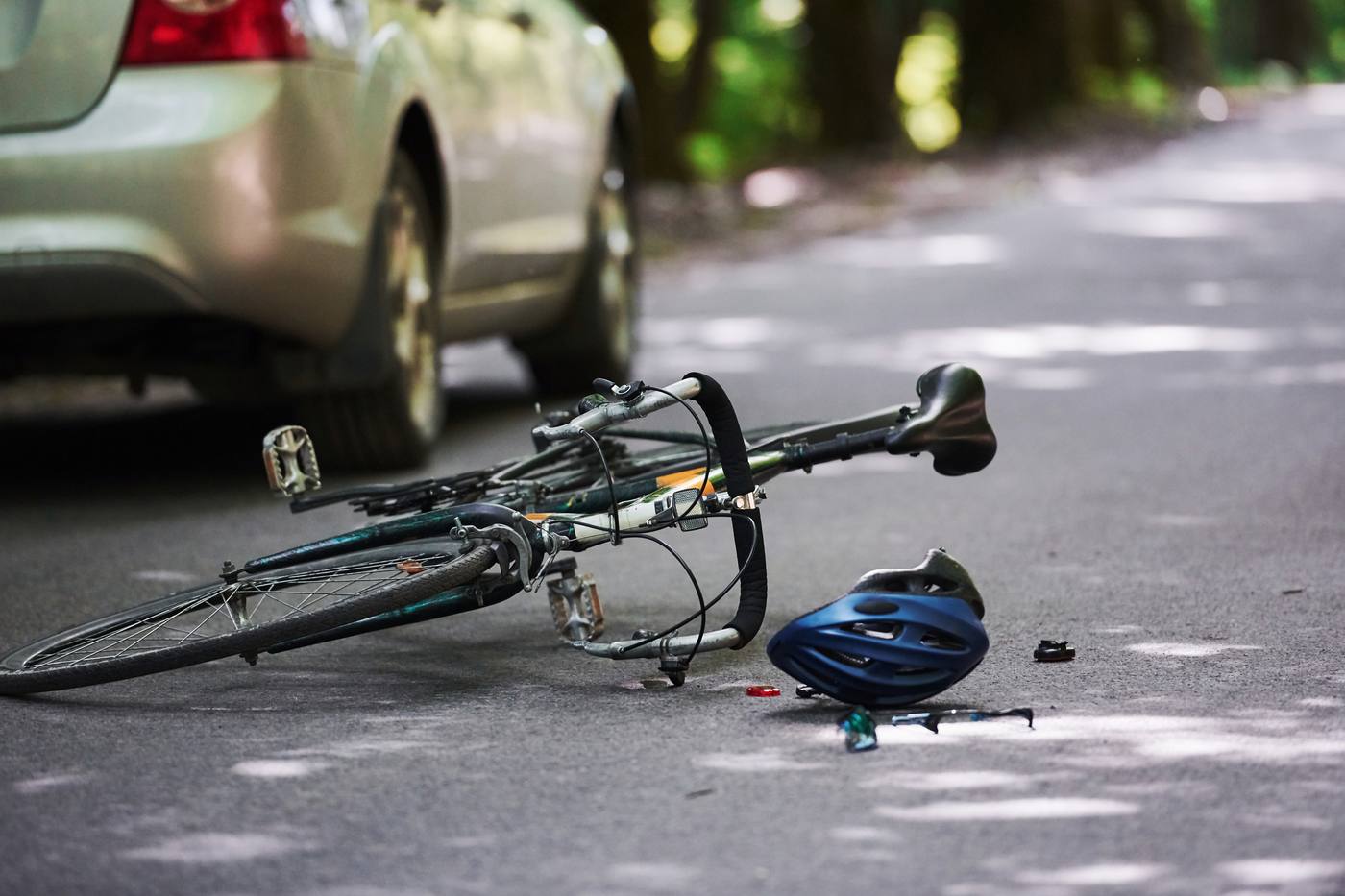
Right of Way, Really
Do pedestrians always have the right of way in Colorado? No, and the difference matters after a crash. Drivers must yield to pedestrians in crosswalks under C.R.S. § 42-4-802, and crosswalks exist at most intersections whether painted or not. But pedestrians crossing mid-block outside a crosswalk must yield to traffic, and stepping suddenly into a vehicle's path can shift fault even in a crosswalk. Fault percentages control recovery: below 50 percent at fault, you can still recover, reduced by your share.
Ask ten Colorado drivers whether pedestrians always have the right of way and most will say yes. Ask ten cyclists whether the Safety Stop is legal and several will hedge. The Front Range produces these collisions constantly, a walker in a Castle Rock crosswalk at dusk, a cyclist clipped by a mirror on Santa Fe Drive, a kid on a bike rolling out of a Highlands Ranch cul-de-sac, and the claims that follow are decided by rules that both sides routinely get wrong. Right of way in Colorado is real, and it is more conditional than most people on either side of the windshield believe.
This article covers the rules that decide these cases: crosswalk law, the 3-foot passing requirement, the Safety Stop, and how comparative fault plays out when an insurer argues the person who got hit should have been more careful.
Crosswalks: Where the Law Protects Walkers Most
Colorado's crosswalk statute, C.R.S. § 42-4-802, requires drivers to yield the right of way to a pedestrian in a crosswalk on the driver's half of the road, or approaching closely from the other half. Two things about that rule surprise people.
First, a crosswalk does not need paint. Legally, crosswalks exist at nearly every intersection as the natural extension of the sidewalk, marked or not. A driver turning through an unmarked crosswalk in a residential Parker neighborhood owes the same duty as one at a striped downtown crossing.
Second, the protection is not absolute. The same statute forbids a pedestrian from leaving the curb so suddenly that a driver cannot yield. Walk into a crosswalk against a signal, or step off the curb into the path of a car twenty feet away, and the right of way you expected becomes a fault argument.
Outside crosswalks, the duty flips: a pedestrian crossing mid-block must yield to vehicles. That does not make a driver blameless for hitting someone, drivers always owe a duty of reasonable care, but it hands the insurer its comparative fault theory ready-made.

The 3-Foot Rule for Cyclists
Colorado gives bicyclists a measurable buffer, and quotes well:
"The driver of a motor vehicle overtaking a bicyclist proceeding in the same direction shall allow the bicyclist at least a three-foot separation between the right side of the driver's vehicle, including all mirrors or other projections, and the left side of the bicyclist at all times." (C.R.S. § 42-4-1003)
Including all mirrors or other projections. That phrase exists because mirror strikes are how many overtaking crashes happen. A violation is a class A traffic infraction, and in a civil claim it is strong evidence of negligence. Cyclists, for their part, generally have the rights and duties of vehicle drivers: ride with traffic, signal, use lights at night. Full statutes are at leg.colorado.gov.
Free Guide: What to Do After an Injury
A step-by-step PDF covering the first moves that protect your health and your claim in Colorado.
Been in a wreck? The clock is already running.
Evidence disappears fast and insurers move faster. Talk to a Colorado injury attorney today. Same-day response, free consultation.
The Safety Stop: Legal Since 2022, Still Argued in 2026
Since 2022, Colorado's Safety Stop law, C.R.S. § 42-4-1412.5, lets bicyclists 15 and older treat a stop sign as a yield sign (slow to a reasonable speed, proceed when clear) and a red light as a stop sign (stop fully, yield, then proceed). The law acknowledged what riders already did and made intersections more predictable.
After a crash, though, expect the adjuster to misstate it. "The cyclist ran the stop sign" is a routine insurer position even when the rider executed a lawful Safety Stop. The law requires yielding to traffic and pedestrians already in the intersection, so the factual question becomes speed and clearance, which witnesses and physical evidence answer. Riders who know the statute's exact terms are far harder to blame with it.
How Fault Sharing Decides These Cases
Every pedestrian and bicycle claim in Colorado runs through modified comparative negligence, C.R.S. § 13-21-111. Your recovery shrinks by your fault percentage and disappears at 50 percent. In practice, these cases become percentage negotiations: the driver was turning without scanning, but the walker was mid-block at night in dark clothing; the driver passed at 18 inches, but the rider had no taillight. A $200,000 case at 30 percent fault is a $140,000 case.
The dollar stakes are high because the injuries are. No vehicle frame absorbs the impact, so these claims carry fractures, head injuries, and long recoveries. Deadlines: three years when a motor vehicle is involved (C.R.S. § 13-80-101), two years for non-vehicle claims, like a cyclist taken down by a pothole or a dog (and claims against government entities for road conditions require a formal notice within 182 days, a trap that catches people every year).

What to Do After Being Hit
Medical care first, even when adrenaline says you are fine; head and internal injuries hide. Get the driver's information and the names of witnesses before they scatter. Photograph the scene, your bike or clothing, and the vehicle. Report the crash so a police record exists. Keep the damaged gear, the cracked helmet especially, because it is physical evidence. And be careful with early recorded statements to the driver's insurer, where casual phrases ("I didn't see them") become fault exhibits. Treatment first, documentation second, statements later with advice.
Injured and not sure what your case is worth?
Do not accept the first offer before you know your numbers. Free case review with a Colorado attorney.
Frequently Asked Questions
Do pedestrians always have the right of way in Colorado?
No. Drivers must yield to pedestrians in crosswalks, marked or unmarked, under C.R.S. § 42-4-802, but pedestrians crossing outside a crosswalk must yield to traffic, and even in a crosswalk a pedestrian may not leave the curb so suddenly that a driver cannot stop. Fault is assigned by percentage based on what each party did.
What is Colorado's 3-foot passing law?
Drivers overtaking a bicyclist must leave at least three feet between the widest part of their vehicle, including mirrors, and the cyclist, under C.R.S. § 42-4-1003. Violations are class A traffic infractions and serve as strong evidence of negligence in an injury claim.
Is the Colorado Safety Stop legal?
Yes. Since 2022, riders 15 and older may treat stop signs as yield signs and red lights as stop signs under C.R.S. § 42-4-1412.5, after yielding to traffic and pedestrians already in the intersection. A lawful Safety Stop is not "running the sign," no matter how an adjuster characterizes it.
Can I recover if I was jaywalking when a car hit me?
Possibly. Crossing outside a crosswalk shifts fault toward you, but drivers still owe a duty of reasonable care, and Colorado allows recovery whenever your share of fault is below 50 percent, reduced by that share. Speed, lighting, and the driver's attention all factor into the split.
How long do I have to file a pedestrian or bike accident claim in Colorado?
Three years when a motor vehicle caused the injury, under C.R.S. § 13-80-101. Non-vehicle claims carry two years. Claims involving dangerous public roads or sidewalks require a government notice within 182 days, so timelines should be checked immediately rather than assumed.
What if the driver who hit me was uninsured or drove off?
Your own uninsured motorist coverage applies, and in Colorado UM/UIM covers you as a pedestrian or cyclist, not just in your car. Hit-and-run drivers are treated as uninsured. This is one of the most overlooked sources of recovery in pedestrian and bicycle cases.
Hit While Walking or Riding? The Percentages Are the Case
These claims are won by establishing the driver's duty and keeping the fault math honest. Tactical Lawyers represents injured pedestrians and cyclists across Douglas County and the Denver metro from our Castle Rock office, on contingency. We coordinate medical treatment first and handle the insurers after. Call (720) 499-0000 or request a free consultation; same-day responses are the norm, never longer than 24 hours.
This article is for informational purposes only and is not legal advice. Pedestrian and bicycle accident outcomes turn on specific facts; consult a licensed Colorado attorney about your situation.